Two shops in Jaipur sell almost the same product at almost the same price. One is always busy and customers happily recommend it. The other has to run discounts just to get people through the door.
The difference is rarely the product. It’s the brand. If you’ve ever wondered what branding actually means, and whether a small business really needs it, this guide explains it in simple words, with examples you can use this week.
Quick Answer: What Is Branding and Why Does a Small Business Need It?
Branding is the way your business looks, sounds and feels to customers, and what they remember about you. A small business needs it because a strong brand builds trust, helps you stand out and lets you compete on value instead of price.
- Trust: people buy from brands they recognise
- Difference: you stop looking like every competitor
- Loyalty: customers return and recommend you
- Value: you can charge for quality, not just match the cheapest price
What Is Branding?
Many people think branding means a logo. A logo is only one small part. Branding is the full impression your business leaves on someone, from the first time they see your Instagram page to the way you reply to a complaint.
A simple way to think about it: your brand is what people say about you when you’re not in the room. Your logo, colours and words help shape that, but your service, your promises and your consistency decide whether it’s a good impression.
Branding vs Logo vs Marketing
- Logo: a symbol that identifies your business
- Branding: who you are, what you stand for and how you come across everywhere
- Marketing: the activities that tell people about your brand, like ads, posts and campaigns
Marketing without branding is like shouting in a crowd with no clear message. Branding gives marketing something worth saying.
Why Does a Small Business Need Branding?
Big companies spend crores on branding, so it’s easy to assume it’s only for them. In reality, small businesses need it even more, because they have fewer resources to waste on forgettable marketing. Here is what a strong brand does for you.
1. It Builds Trust Faster
Customers can’t test everything before buying. They look for signals that you’re real and reliable. A clean logo, a consistent look, a professional website and real reviews all say, “This business is serious.” That trust shortens the time between first look and first purchase.
2. It Helps You Stand Out
In a city like Jaipur, there are many options for almost everything: cafes, salons, coaching centres, jewellers, agencies. If you look and sound like everyone else, customers choose on price alone. A clear identity gives them a reason to choose you.
3. It Lets You Compete on Value, Not Price
When people see a business as trustworthy and different, they’re willing to pay for it. A brand moves the conversation from “who is cheapest?” to “who is best for me?”
4. It Creates Loyal Customers
People stick with brands they feel connected to. A consistent experience and a clear personality turn one-time buyers into repeat customers who recommend you to friends and family.
5. It Makes Your Marketing Work Harder
When your colours, tone and message stay the same across Instagram, your website and your ads, every post builds on the last one. People start to recognise you faster, so each rupee spent on marketing does more.
6. It Makes Hiring and Partnerships Easier
Good employees, suppliers and partners prefer working with businesses that look organised and have a clear identity. A strong brand also makes it easier to ask for referrals and collaborations.
The Core Elements of a Brand

You don’t need a huge budget to build a brand, but you do need to decide on these basics:
- Purpose and positioning: what you do, who it’s for and why you’re different
- Name and logo: simple, easy to read and easy to remember
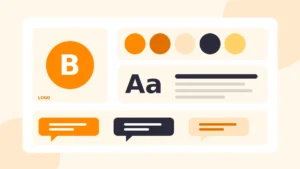
- Colour palette: two or three main colours used consistently
- Typography: one or two fonts for headings and body text
- Tone of voice: friendly, premium, playful or professional, and the same everywhere
- Messaging: a clear tagline and a few key points you repeat
- Brand guidelines: a short document so everyone uses the brand the same way
A Simple Example: A Home Bakery in Jaipur
Imagine a home baker who sells cakes through Instagram. Without branding, her page uses a different colour every post, her captions change tone, and her packaging is plain. Customers see another cake seller.
With branding, she picks a warm pastel palette, one friendly voice (“baked fresh, made with love”), a neat logo on every box and the same look on her WhatsApp catalogue. Now customers recognise her at a glance, remember her name and recommend “that pastel box bakery.” The cakes didn’t change. The impression did.
How to Build Your Brand in 6 Steps
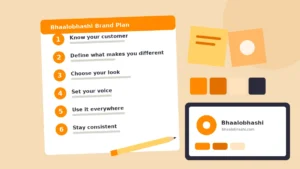
- Know your customer. Write down who they are, what they worry about and what makes them say yes.
- Define what makes you different. Speed, quality, price, service, story. Pick the one or two that are truly yours.
- Choose your look. Logo, colours and fonts that fit your audience and stay consistent.
- Set your voice. Decide how you talk. Use the same style in captions, replies and ads.
- Use it everywhere. Apply the same identity to your website, social profiles, packaging, bills and WhatsApp.
- Stay consistent and review. Check every few months what customers say about you and refine.
Common Branding Mistakes Small Businesses Make
- Thinking a logo is the whole brand. A logo without consistency and good service is just a picture.
- Changing the look too often. Constant changes confuse people and reset recognition.
- Copying competitors. If you look the same, you get compared on price.
- Being different on every platform. Different tone and colours on Instagram, website and WhatsApp reduce trust.
- Ignoring the customer experience. A beautiful brand with slow replies and poor service won’t last.
- Waiting until you’re big. The best time to start is early, while your identity is still easy to shape.
Signs Your Business Needs Branding
- Customers often compare you only on price.
- Your social media, website and printed material all look different.
- People don’t remember your business name after meeting you.
- Competitors with weaker products seem to get more attention.
- You’re planning to expand to a new city or add new products.
- Your marketing feels random, with no clear message.
If you nodded to two or more, branding is probably the missing piece. Once it’s in place, social media marketing and performance marketing campaigns work better because they carry a clear, recognisable message.
Want Help Building a Brand That Customers Remember?
At Bhaalobhashi, we help businesses build brand identities that look consistent everywhere, from logo and colours to messaging, social media and website. If you want a brand that stands out and brings in better customers, Talk to the Bhaalobhashi team for a free consultation, or visit the Bhaalobhashi homepage to see how we work.
Frequently Asked Questions
What is branding in simple words?
Branding is the way your business looks, sounds and feels to customers, and what they remember about you. It includes your logo, colours, tone, service quality and reputation.
Is branding only for big companies?
No. Small businesses benefit the most, because a clear brand helps them build trust and stand out without spending heavily on advertising.
What is the difference between a logo and a brand?
A logo is a visual symbol. A brand is the complete impression people have of your business, including how you treat customers and how consistent you are.
How much does branding cost for a small business?
It depends on what you need, such as a logo only or a complete identity with guidelines and website. A good agency will suggest a package that fits your stage and budget, so you can start small and build up.
How long does it take for branding to show results?
Visual identity can be created in a few weeks, but brand recognition and trust build over months of consistent use. The more steadily you apply it, the faster people remember you.
Conclusion
Branding isn’t a luxury for big companies. It’s how a small business becomes the one customers trust, remember and recommend. You don’t need to do everything at once. Start with your customer, define what makes you different, choose a simple look and voice and use them consistently.
Over time, that consistency turns a business people compare on price into a brand people choose on purpose.
Ready to build a brand that stands out? Talk to the Bhaalobhashi team and let’s shape your identity together.